10 Key Signs a Video Production Company Is the Right Fit for Your Business

Choosing a production partner is rarely just about who can make the prettiest reel. The wrong fit can lead to missed deadlines, unclear costs, creative work that feels off strategy, or a final video that pleases the production team more than the people it was meant to reach.
The right fit feels different from the first conversation. The team asks better questions. They explain trade-offs clearly. They show work that connects to real business goals. They help reduce risk, not add to it.
Here are 10 signs that a video production company is likely to be a strong match for your business.

The work should prove they can solve your problem
1. Their production portfolio shows quality and relevance
A polished portfolio matters, but relevance matters just as much. A company might create beautiful music videos or short films and still be a poor fit for an internal safety video, investor update, product story, recruiting campaign, or customer case study.
Look for work that matches your intended use. If the goal is to explain a complex service, watch how they handle clarity. If the goal is to build trust with customers, study the tone, pacing, and interview quality. If the goal is recruitment, notice whether the people on camera feel natural or scripted.
Strong portfolio signs include:
Clean audio that makes speakers easy to understand
Lighting that fits the subject and location
Editing that supports the message instead of distracting from it
Visual decisions that feel intentional
A clear beginning, middle, and end
Ask for examples close to your industry, audience, or format. If no exact match exists, ask the team to explain how a related project would inform your own. A good answer will focus on purpose, audience, production constraints, and results.
2. Client testimonials speak to the full experience
Reviews should tell you more than “the video looked great.” Quality matters, but the working relationship matters too.
Look for testimonials that mention communication, planning, professionalism, flexibility, and follow-through. A team that made the process easier for past clients will likely do the same for a new project.
Pay attention to the source. A testimonial from a department leader, producer, communications director, founder, or operations lead may reveal how the team works with decision makers and stakeholders. Public reviews can also show patterns. One glowing review is useful. Repeated comments about reliability, preparation, or clear communication carry more weight.
If the project is high stakes, ask for references. The best questions are specific:
Did the team stay aligned with the brief?
Were costs and timelines clear?
How did they handle feedback?
What changed from the first plan to final delivery?
Would you hire them again for a similar project?
A capable team should welcome those questions.

The team should understand the assignment before they pitch ideas
3. Their communication style is clear and responsive
Early communication often predicts the rest of the project. If a team is vague, slow, or disorganized during the sales process, that pattern may continue once the schedule tightens.
A strong partner responds in a timely way, answers direct questions, and explains what they need from you. They do not leave important details buried in long emails or assume everyone understands production terminology.
Good communication also means knowing when to push for clarity. A thoughtful producer may ask:
Who needs to approve the final cut?
What must the audience understand or do after watching?
Where will the video appear?
Are there legal, compliance, or accessibility requirements?
What cannot be shown on camera?
Who controls access to locations, people, or products?
For corporate teams, this matters because video projects often involve multiple stakeholders. A production partner should help organize those voices, not get lost among them.
4. They show real understanding of your industry
A team does not need decades in your exact field to do good work, but it does need to respect the context. A healthcare video, manufacturing story, higher education feature, nonprofit campaign, and public agency message all require different levels of sensitivity, access, terminology, and review.
Industry understanding shows up in the questions they ask. They should want to know what language your audience uses, what claims require proof, what safety rules apply, and which details matter to subject matter experts.
For businesses in the Sacramento region, local context may also matter. A shoot involving state policy leaders, agricultural operations, university partners, healthcare sites, or civic locations benefits from a team that understands regional logistics and stakeholder expectations.
A good sign is when the company can translate complex material without watering it down. They should help make the message clear while protecting accuracy.
5. Their creative approach feels thoughtful, not generic
Fresh ideas are valuable when they serve the goal. Be wary of a production team that arrives with a fixed concept before learning about the audience, message, budget, and internal constraints.
The best creative partners can explain why a concept fits. They may recommend a documentary-style interview, a scripted piece, animation support, product footage, a customer story, or a multi-video campaign. The format should come from the problem, not from the company’s favorite style.
Listen for creative reasoning such as:
“This topic needs a real person on camera because trust is the main barrier.”
“This would work better as a short series because the audience has different needs.”
“We should avoid heavy scripting here because the subject matter will feel more credible in plain language.”
“Animation can help explain the process that cameras cannot easily show.”
A strong video production company brings ideas, but it also knows how to adapt them to business goals.

The process should be clear before the cameras roll
6. The budget aligns with the scope and is easy to understand
A good quote should not feel like a mystery. Even if the final cost depends on details, the company should explain what drives the budget.
Common cost factors include:
Budget factor | Why it matters |
Pre-production | Covers planning, scripting, scheduling, interviews, and creative direction |
Production days | Affects crew size, equipment, travel, location time, and talent needs |
Crew roles | Determines whether the project needs a producer, director, cinematographer, sound mixer, makeup artist, or production assistant |
Post-production | Includes editing, color, sound, graphics, captions, and revision rounds |
Deliverables | Covers cutdowns, file formats, aspect ratios, captions, and language versions |
Transparency does not always mean the lowest price. It means the number makes sense. If one bid is far below the others, ask what is missing. A low quote may exclude planning time, sound, revisions, insurance, location costs, or post-production support.
The right partner will help you match ambition to budget. They can also suggest ways to control cost without damaging the final result, such as reducing locations, shortening shoot days, simplifying graphics, or grouping interviews efficiently.
7. They have the technical skill and equipment to support the work
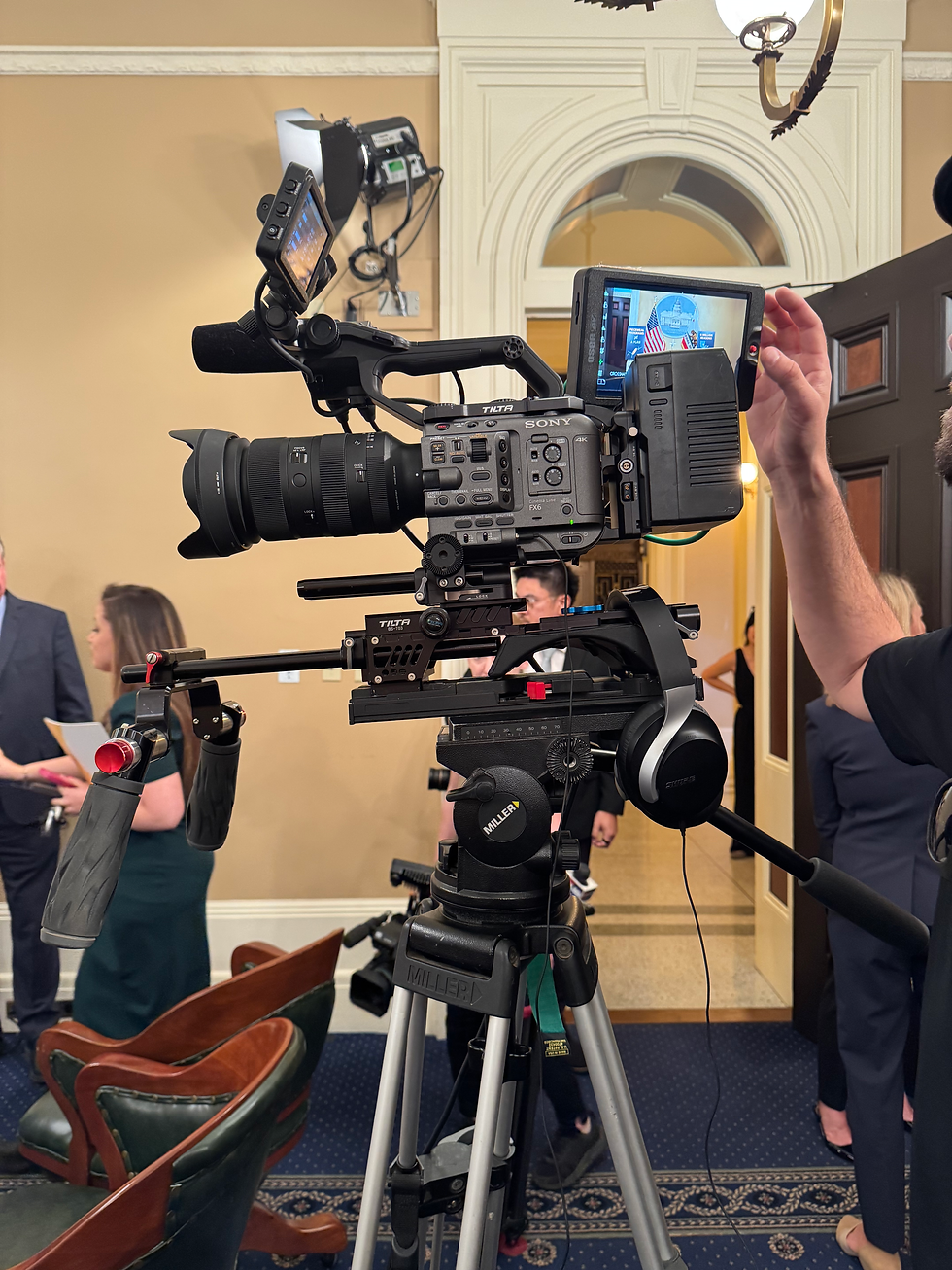
Equipment alone does not make a great video, but the right tools matter. The team should have access to cameras, lenses, lighting, audio gear, stabilizers, teleprompters, and backup systems that fit the assignment.
Technical skill is especially clear in sound. Viewers may forgive a simple visual style, but poor audio quickly damages trust. Ask how the team captures interviews, handles noisy locations, backs up footage, and monitors sound on set.
For projects that require a polished finish, ask about:
4K capture and delivery needs
Multi-camera interviews
Location lighting
Drone requirements and licensed operation
Teleprompter support
Data backup during and after the shoot
Captioning and accessibility needs
Color correction and sound mixing
A strong team explains the technical plan in plain language. They do not hide behind gear names, but they can discuss the details when needed.
8. Their project management keeps people aligned
Video production involves many moving parts. Without strong project management, even a simple shoot can become stressful.
Look for a team that defines the process early. They should clarify milestones, review points, deadlines, responsibilities, and approval paths. For larger organizations, this is critical. A missed approval from legal, HR, compliance, or senior leadership can delay the whole project.
Useful project management documents may include:
Creative brief
Production schedule
Shot list
Interview guide
Call sheet
Asset list
Review timeline
Delivery checklist
The strongest producers make the process feel organized without making it rigid. They plan carefully, then adjust when weather changes, interviewees run late, locations shift, or leadership asks for a new version.

The partnership should hold up through delivery
9. They have a record of timeliness and reliability
A missed deadline can affect a launch, event, board meeting, campaign, training rollout, or public announcement. Timeliness is not just a production courtesy. It can protect a larger business plan.
Ask how the team builds schedules. Do they allow time for stakeholder reviews? Do they explain when feedback is due? Do they flag risks early? Do they provide realistic delivery dates rather than optimistic guesses?
Reliability also shows on set. The crew should arrive prepared, respect location rules, keep the day moving, and protect the experience of people appearing on camera. This matters when filming executives, customers, employees, or community partners who have limited time.
Signs of a reliable team include:
Clear start and wrap times
Backup plans for weather or location issues
Confirmed interview schedules
Organized release forms when needed
Secure media backup
Early notice if something changes
Strong partners do not promise that nothing will go wrong. They show how they will respond if it does.
10. Their post-production support matches your long-term needs
The video editing is where the project becomes a finished communication tool. Post-production support should match how the video will be used after delivery.
Ask what is included in the edit. Some teams include a set number of revision rounds, basic color correction, audio mixing, licensed music, captions, and final exports. Others price those items separately. Neither approach is wrong, but it should be clear.
Post-production may include:
Main video edit
Short cutdowns
Vertical or square versions
Captions and transcripts
Motion graphics
Sound mix
Color correction
Thumbnail stills
File compression for different platforms
Archiving of project files
Also ask what happens after delivery. If a name changes, a date needs removal, a compliance note shifts, or a shorter version becomes useful later, can the team help? How long do they keep files? What does a future edit cost?
For corporate teams, post-production support often determines the real value of the project. One well-planned shoot can produce a main video, internal version, short clips, event opener, and training asset if the team plans for those needs early.
A practical way to compare finalists
When evaluating several companies, avoid choosing based only on the reel or the lowest quote. Use a simple scorecard to compare fit.
Rate each company from 1 to 5 in these areas:
Indicator | What to look for |
Portfolio relevance | Similar goals, formats, audiences, or production challenges |
Client feedback | Consistent praise for process, quality, and reliability |
Communication | Clear answers, timely responses, and useful questions |
Industry understanding | Respect for audience, terms, compliance, and context |
Creative thinking | Ideas that fit the message and budget |
Budget clarity | Clear scope, line items, and revision terms |
Technical skill | Strong audio, lighting, camera work, and backups |
Project management | Defined milestones, schedules, and approvals |
Reliability | Realistic timelines and strong preparation |
Post-production support | Clear revision process, deliverables, and future help |
The score does not need to make the decision for you. Its value is the conversation it creates. If one company scores well on creativity but poorly on budget clarity, that is a risk to address. If another has a less flashy reel but strong references, clear process, and relevant experience, it may be the safer choice.

Choose the team that reduces risk
The best production partner brings more than cameras and editing software. It brings judgment. It understands the audience, protects the schedule, respects the budget, and helps turn a business need into a clear finished piece.
Before signing, look for proof in three places: the work, the process, and the conversation. The portfolio should show quality and relevance. The proposal should make scope, timing, and costs clear. The early communication should give confidence that the team can guide the project from planning through delivery.
When those signs line up, the decision becomes much easier. You are not just hiring a crew. You are choosing a partner that can help your message hold up on screen. Reach out to Dynasty Video Productions if you are looking for guidance on hiring a full video production crew in Sacramento or single crew members who can get the job done.